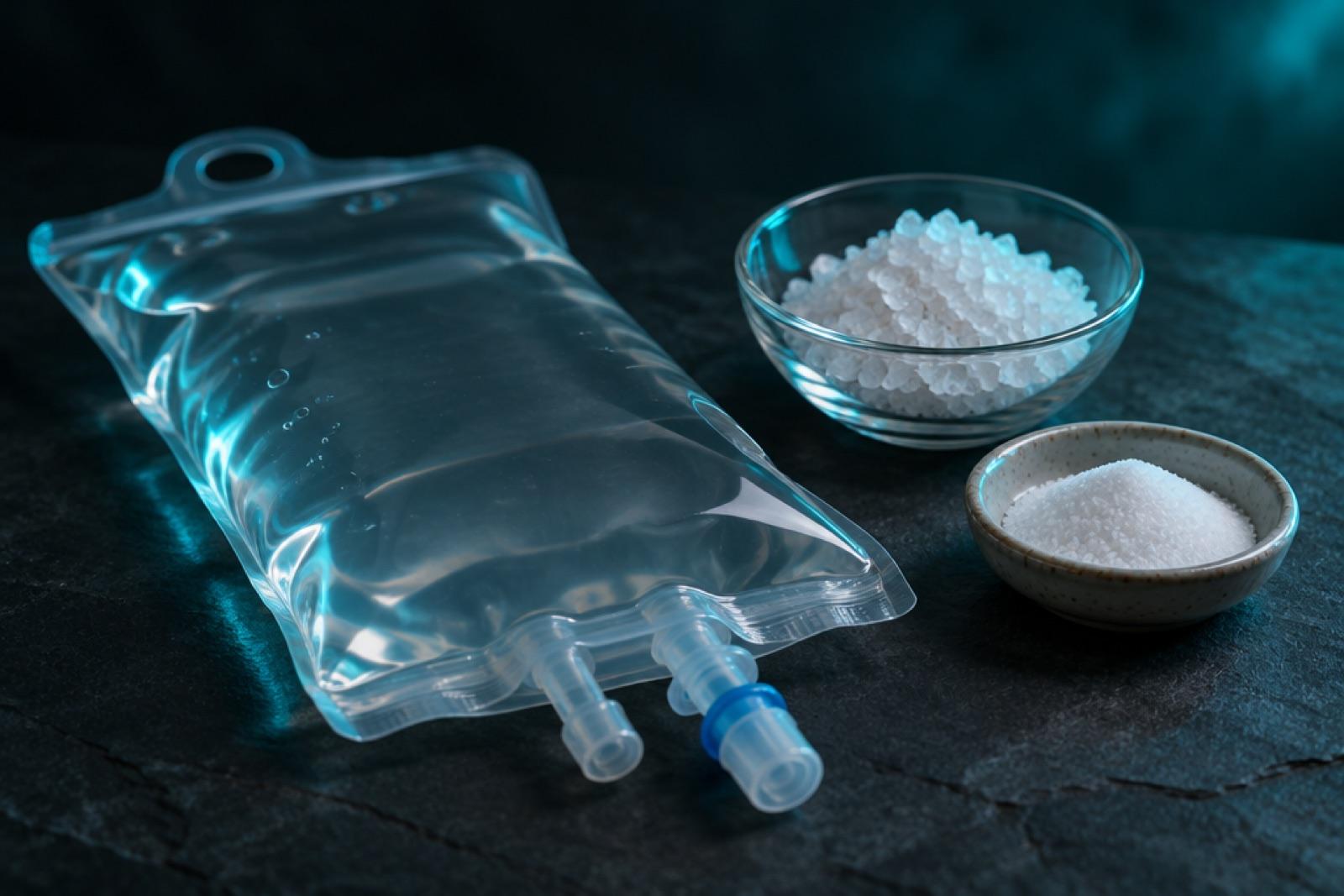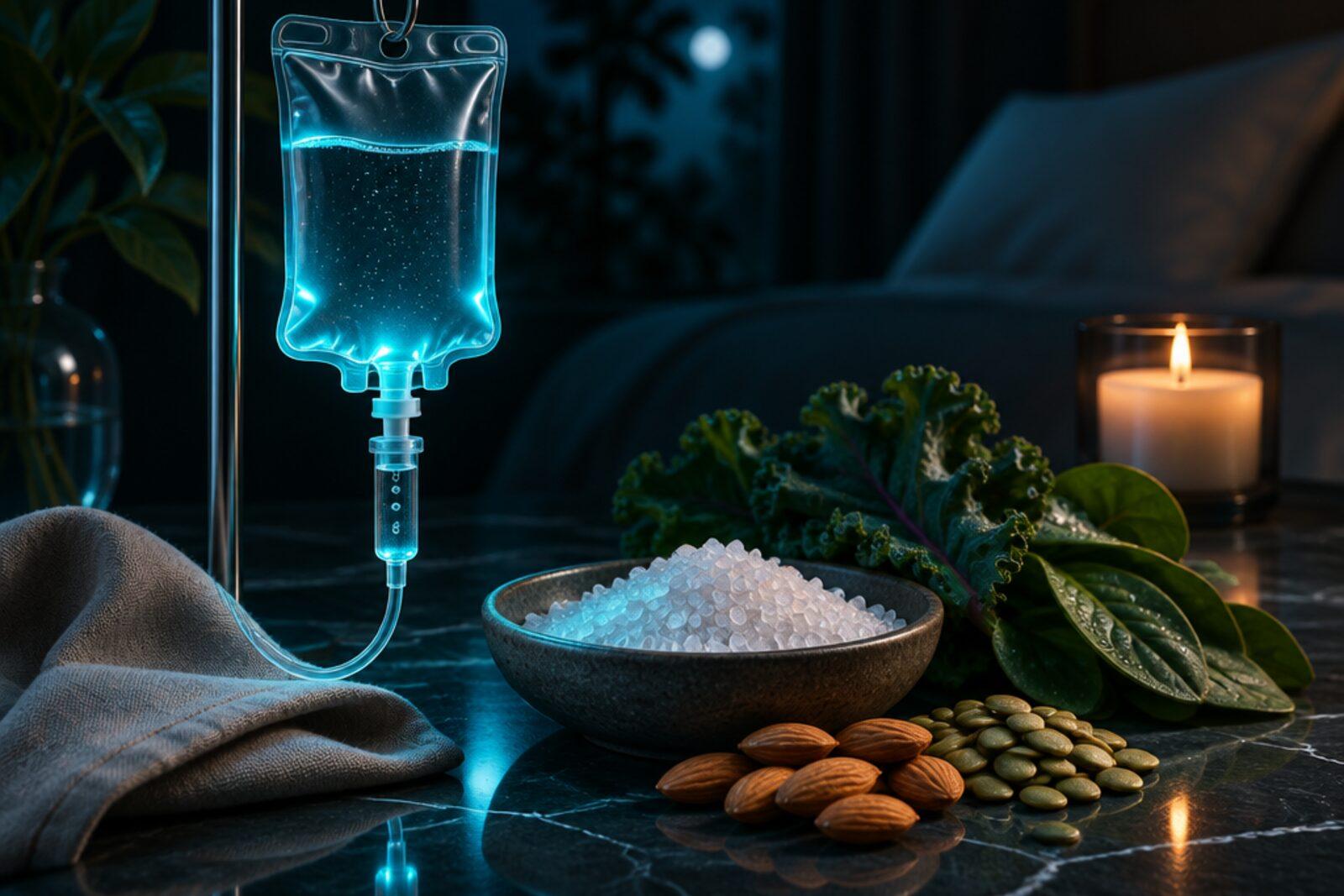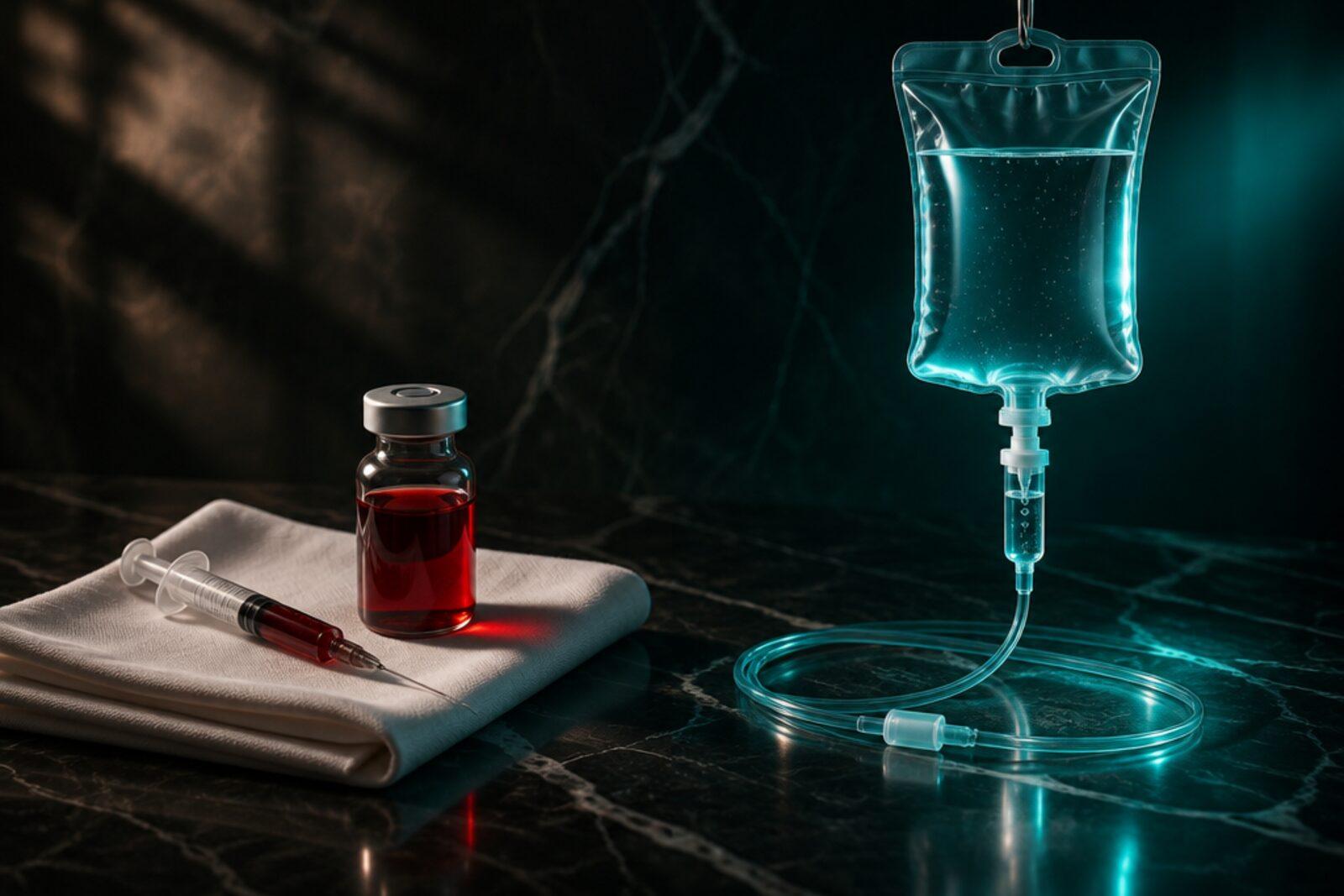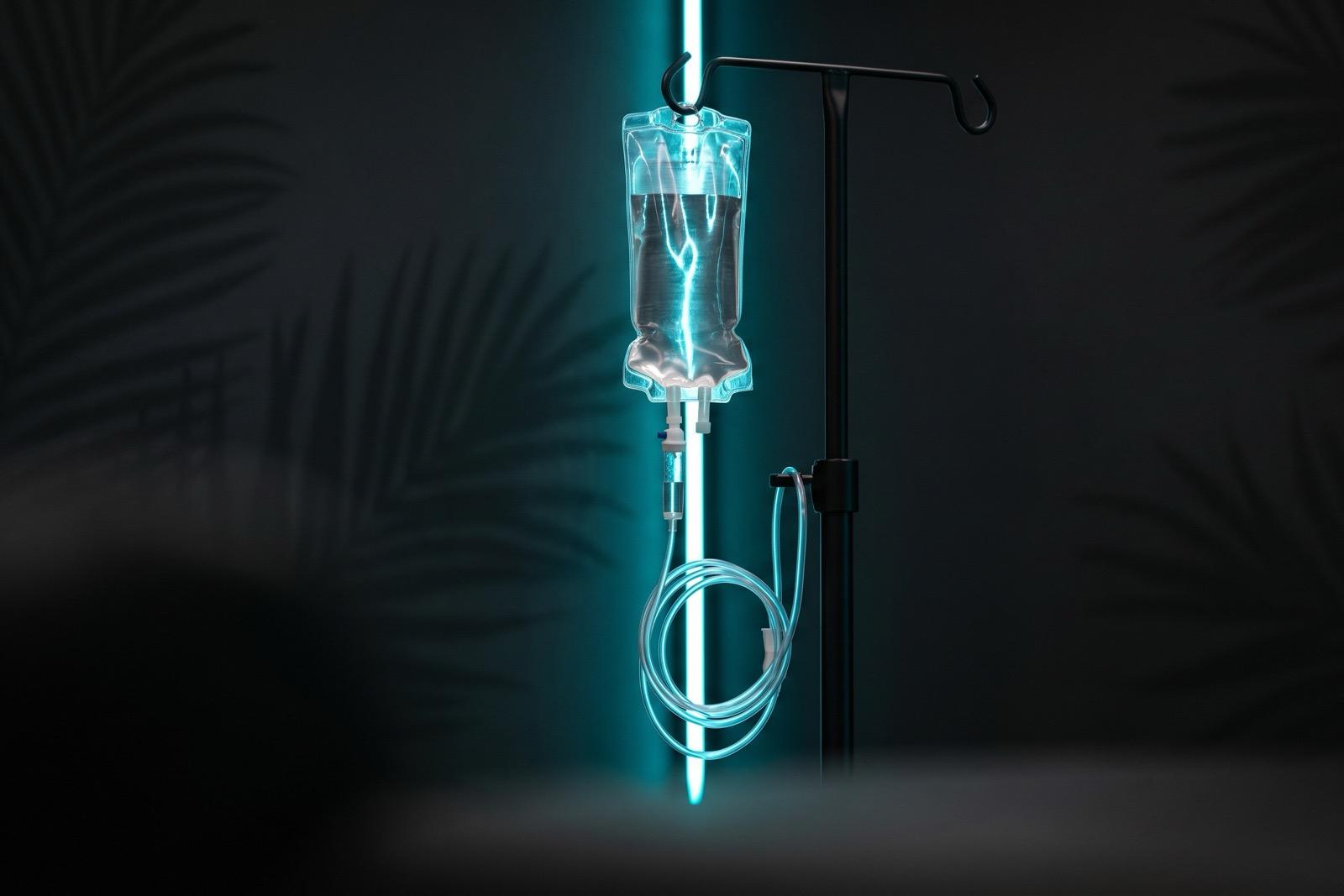
Almost every drip on the Elite menu starts the same way: a clear bag of saline hanging from a pole. It looks like plain water, and in a sense it nearly is. But the small difference between saline and water is exactly what makes it safe to run straight into a vein. Here is what is actually in the bag, what your body does with it and how the IV itself works.
What Saline Is
"Normal saline" is sterile water with a precise amount of sodium chloride dissolved in it. Sodium chloride is ordinary salt, the same compound in table salt, but pharmaceutical grade and measured exactly. The standard concentration is 0.9 percent, which works out to about 9 grams of salt in a 1-liter bag. Nothing else is added: no sugar, no preservatives, no color.
The bags themselves are sealed, single-use and sterile. A wellness infusion typically uses a 500 milliliter or 1 liter bag, which is roughly 2 to 4 cups of fluid.
Why Salt Water and Not Plain Water
Your blood is not pure water. It carries dissolved salts, mainly sodium and chloride, at a fairly fixed concentration. Normal saline is mixed to match that concentration closely, which is why it is described as "isotonic." Because it is already in balance with your blood, it can be added directly to the bloodstream without pulling water into or out of your cells.
Plain water cannot do that. If sterile water were run into a vein, it would be far more dilute than blood. Water would rush into red blood cells to even things out, and those cells could swell and burst. The salt in saline is what prevents this. It is the reason the bag is "saline" and not just "water."
What Saline Does in the Body
Once saline is in the bloodstream, it becomes part of your circulating fluid. From there, the body treats it like any other fluid you take in, with one difference: it skips the stomach and intestines, so it is available immediately rather than after digestion and absorption.
- Fluid volume. Water makes up most of your blood plasma and the fluid that surrounds your cells. Saline adds to that volume directly, which is why it is used for hydration.
- Sodium. Sodium helps the body hold onto water in the right places and plays a role in normal nerve and muscle function. Saline delivers sodium along with the water, so it supports fluid balance rather than diluting it.
- A carrier for other ingredients. On the Elite menu, saline is the base that vitamins, minerals and amino acids are mixed into. The bag carries those ingredients into circulation at a controlled, gradual pace over the course of the drip.
The kidneys manage what comes next. They continuously adjust how much water and sodium leave the body in urine, so the fluid from a drip is balanced against what you have taken in and lost. This is also why screening matters: people with kidney, heart or fluid-balance conditions handle extra sodium and fluid differently, and a nurse needs to know that before a bag is hung.
How an IV Gets It Into a Vein
The word "intravenous" simply means "into a vein." Veins carry blood back toward the heart, sit close to the surface on the forearm and hand, and are under lower pressure than arteries, which makes them the safe, practical route for a drip.
- Choosing the site. Your nurse looks and feels for a suitable vein, usually in the forearm, the inside of the elbow or the back of the hand. A snug band above the site briefly slows blood flow so the vein fills and is easier to see.
- Cleaning the skin. The area is cleaned with an antiseptic so nothing on the skin surface enters with the catheter.
- Placing the catheter. The IV device is a very thin, flexible plastic tube called a catheter, mounted over a needle. The needle guides the catheter into the vein and is then withdrawn and discarded. Only the soft catheter stays in your arm, which is why a well-placed IV feels like pressure rather than a sharp point once it is in. It is taped in place with a clear dressing.
- Connecting the bag. The saline bag hangs above you on a pole. Tubing runs from the bag, through a small clear chamber where you can see the drops fall, down to your catheter. Your nurse fills the tubing with fluid before connecting it so no air goes in.
- Letting gravity work. There is no pump pushing the fluid. Because the bag is higher than your arm, gravity moves the saline down the tubing and into the vein. A small roller clamp on the line pinches the tubing to set how fast the drops fall, so the nurse controls the pace of the whole drip from that one dial.
- Finishing. When the bag is empty, the nurse closes the clamp, removes the catheter, applies light pressure and covers the site with a bandage. Infusion time varies with the ordered service and your response.
Throughout the drip, your nurse stays with you and checks the site. Tell them right away if you notice pain, burning, swelling or coolness around the IV. Those signs can mean fluid is going into the tissue around the vein instead of into it, and the fix is simply to stop and re-site the catheter.
Saline Compared to Drinking Water
For most healthy people, drinking water and eating normally is the right way to rehydrate, and it is what we recommend first. A glass of water has to be absorbed through the digestive tract, which takes time but works well. IV saline bypasses that step, which is useful when oral intake is difficult or when a client wants fluid delivered in a controlled, measured way after travel, heat or an event. Neither is "better." They are different routes, and the right one depends on your situation and clinical screening.
If you are experiencing severe weakness, confusion, fainting, chest pain, shortness of breath, ongoing vomiting or signs of heat illness, seek urgent medical care rather than booking a wellness infusion.
The Bag Is the Beginning
Every drip on the Elite menu is built on the same foundation: a sterile bag of saline, matched to your blood, delivered through a small catheter by a nurse who stays by your side. What gets added to that bag is where the options begin. If you want to see how the different drips are built on top of saline, our infusion menu lists the ingredients in each one. And if you are wondering whether the salt in the bag is the same as the salt in your kitchen, or whether a hospital hangs the same bag, we answer that in is IV saline the same as salt?.
Curious which drip fits your goal? Book an Elite Infusions + Wellness appointment or contact our team and we will walk you through the options.
Educational note: This content is for general education and is not medical advice. Services and supplements should be selected after appropriate screening and, when indicated, consultation with a qualified healthcare professional. Individual results vary.